 | ||
| Your browser is not supported. | ||
|
Please browse our site using any of the following options:
| ||


Understanding The Basics Of 4WD & Camping Power Systems

Whether you're planning a weekend escape or a months-long expedition, having reliable power is the foundation of every great 4WD and camping setup. From keeping your fridge cold to charging your essential devices, understanding your power needs is crucial for comfortable and safe off-grid adventures. But with so many components involved, from batteries and solar panels to inverters and chargers, it's easy to feel overwhelmed. Don't worry, we're here to explain the essentials and help you build a system that matches your adventure style.
At its core, a good 4WD power system revolves around three key elements:
- Storage - your batteries
- Charging - whether via solar, alternator or both
- Distribution - how you deliver power to your equipment and appliances
The right combination depends on how you travel and how long you'll be gone for.
Ready to take the confusion out of 4WD and camping power? Let's explore how to create a system that keeps you powered up wherever the track takes you, because nothing beats the freedom of knowing your essentials will work when you need them most!
Quick Links
- What Are 4WD & Camping Power Systems
- Why 4WD & Camping Power Systems Are Essential For Off-Grid Camping
- What You'll Need For A 4WD Power Setup
- Example Of A Setup For Beginners
- Example Of A Setup For Advanced 4WDers & Campers
- Safety Tips When Operating Your Power Setup
- Common Issues To Avoid
- Tips For Keeping Your Power Systems Running Smoothly
What Are 4WD & Camping Power Systems
At their core, 4WD and camping power systems are self-sufficient electrical setups designed to keep your devices running while off-grid. These systems typically include a deep-cycle battery or dual batteries, a charging source like a DC-DC charger and/or solar panels, and power distribution components such as inverters and fuse panels. Whether you need to power a fridge, lights or communication devices, a well-planned power system ensures you stay comfortable and connected in remote locations without relying on mains electricity.
Why 4WD & Camping Power Systems Are Essential For Off-Grid Camping
Off-grid camping means you'll have no access to external power sources, meaning a reliable power system is crucial. Without one, you risk having flat batteries, spoiled food and dead electronics. A proper setup ensures you can avoid all these potential issues, whether you're parked for extended periods or moving between locations. It also protects your vehicle's starter battery from draining, so you don't wind up stranded.
What You'll Need For A 4WD Power Setup
A functional 4WD power system requires several key components working together. The right combination depends on your power needs, trip duration, and budget. Below, we break down the essentials for a reliable off-grid setup.
Battery Systems
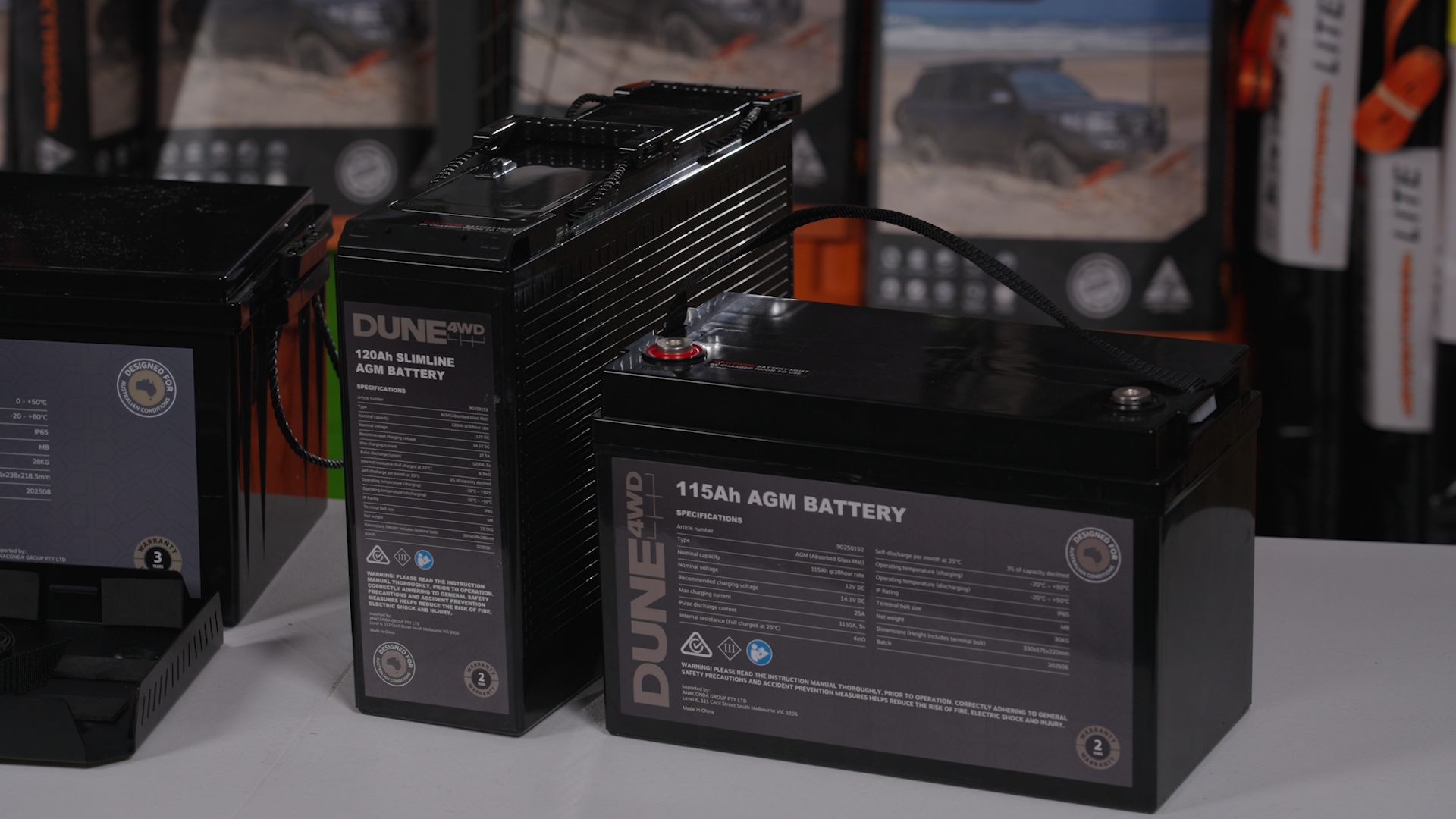
The heart of your power system is a deep-cycle battery (AGM or lithium) that stores energy for your accessories. Unlike starter batteries, deep-cycle batteries handle repeated discharging and recharging, making them ideal for camping. To find out more, check out our article on How To Choose The Right 4WD Battery For Your Setup.
Why A Dual Battery Setup Is Common
A dual battery system keeps your starter battery dedicated to vehicle operation while employing a secondary battery for camping use. This prevents you from being stranded with a flat main battery and allows you to run appliances without worry.
DC-DC Chargers
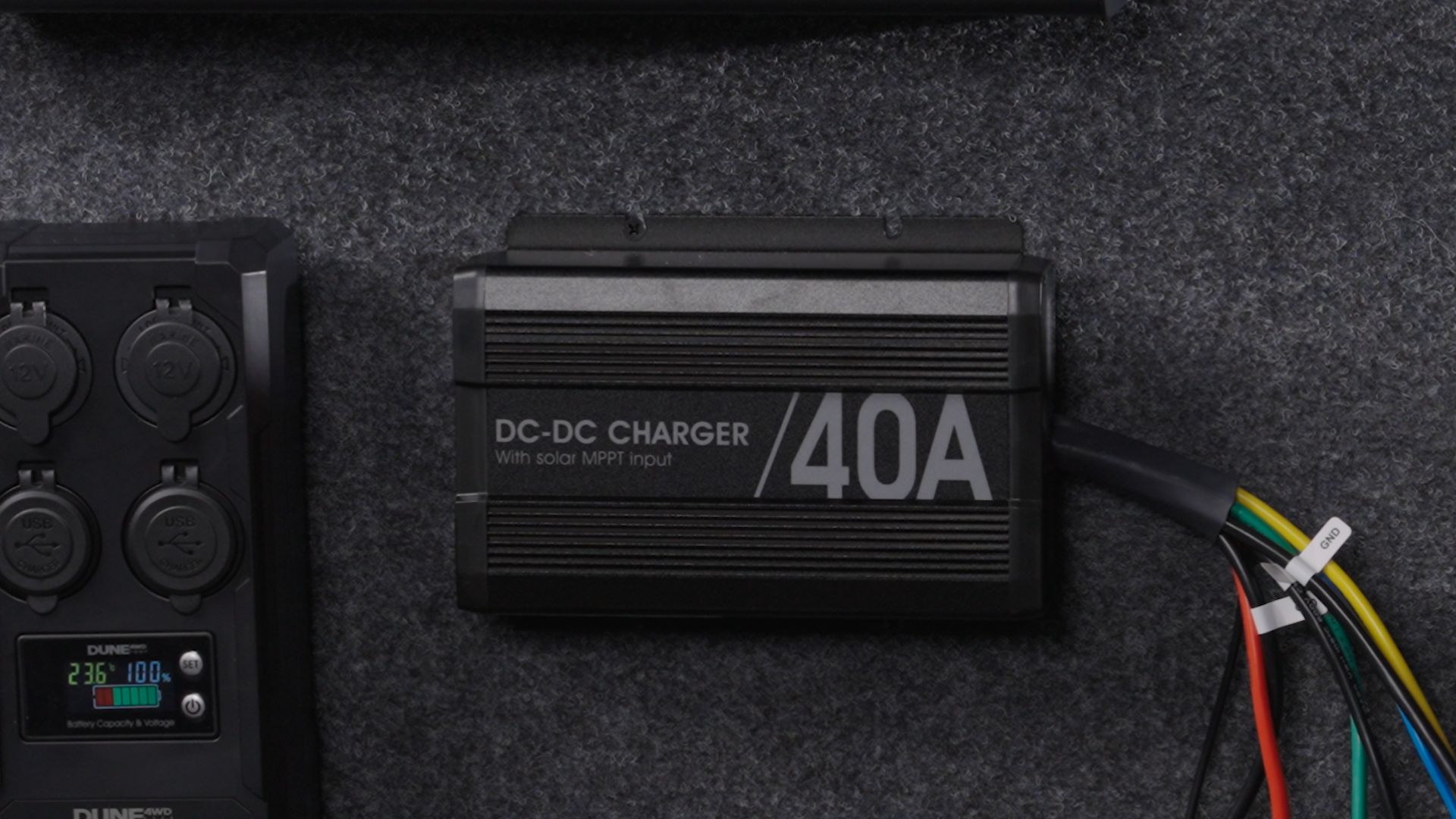
A DC-DC charger ensures your auxiliary battery charges efficiently from your vehicle's alternator, even with modern variable-voltage systems. Find out more in our What Is A DC-DC Charger & Why Do You Need One? article.
Why Are They Better Than Isolators?
Unlike basic isolators, DC-DC chargers actively boost and regulate voltage, providing a full, multi-stage charge. This is especially important for lithium batteries, which require precise charging voltages. They also often come with internal solar MPPT controllers, allowing solar input.
Solar Panels & Blankets
Solar panels provide renewable energy when parked, keeping your batteries topped up in sunny conditions. Foldable solar blankets are great for portability, while rigid panels offer higher efficiency for fixed setups. Our What You Need To Know About Solar Power For 4WDs & Camping has more information.
Inverters
An inverter converts 12V DC power to 240V AC, allowing you to run household appliances like laptops or small power tools. For sensitive electronics, a pure sine wave inverter is best. Get more information in our Everything You Need To Know About Inverters For 4WDing & Camping article.
Control Hubs & Monitors
A battery monitor or power management system tracks things like energy use, battery voltage and solar input, helping you avoid unexpected power shortages. Some advanced hubs allow Bluetooth monitoring for real-time updates. To learn more, read our Everything You Need To Know About Control Hubs For 4WDing & Camping article.
Example Of A Setup For Beginners
A basic starter setup might include:
- A 100Ah AGM battery in a portable box
- A 20A DC-DC charger for alternator charging
- A 100W solar blanket for backup power
- A fuse panel for accessory connections
- A battery monitor to track usage
This setup would provide enough power for a fridge, lights and phone charging on short trips.
Example Of A Setup For Advanced 4WDers & Campers
An advanced system could feature:
- A 200Ah lithium battery for extended capacity
- A 40A DC-DC charger with MPPT solar input
- 300W of solar panels (fixed or portable)
- A 2000W pure sine wave inverter for high-power devices
- A smart battery monitor with Bluetooth
- A modular power distribution hub
This setup supports long-term living off the grid with multiple appliances.

Fuse Everything
Every positive connection should be fused close to the battery to prevent short circuits. Use appropriately rated fuses or circuit breakers for each circuit.
Use The Correct Cable Sizes
Undersized cables can overheat and cause a voltage drop. Match cable thickness to current draw, e.g. 6mm2 for 20A loads or 16mm2 for 50A+.
Ventilation & Battery Mounting
Batteries (especially AGM batteries) should be mounted securely in a well-ventilated area to prevent gas buildup and overheating. Lithium batteries need protection from extreme heat.
Overcharging
Cheap regulators or incorrect settings can damage batteries. Use a quality MPPT solar regulator or DC-DC charger with the right battery profile.
Poor Solar Performance
Dirty panels, shade or incorrect angles reduce efficiency. Clean your panels regularly and adjust their position for maximum sun exposure.

Tips For Keeping Your Power Systems Running Smoothly
- Check connections periodically for corrosion or looseness.
- Don't drain your batteries below 50% (AGM) or 20% (lithium).
- Store batteries charged if unused for long periods.
- Upgrade wiring if adding more accessories to avoid overloads.
- Use a battery monitor to track performance and catch issues early.
With proper planning and maintenance, your 4WD power system will deliver reliable energy for all your adventures.
Shop Our Range Of 4WD & Camping Power Solutions At Anaconda Today
A dependable power system is a great source of confidence when you're 4WDing or camping - there's no better feeling than knowing you'll be able to keep all your electric gear running and count on your vehicle to start when you need it. Shop Anaconda for all your off-grid power needs and other 4WD and caravan supplies, including 4WD recovery gear, communication and navigation devices, car and camping fridge/freezers, towing equipment, roof top tents and much more! Find your local Anaconda store and check out our extensive 4WD range today.
Before you set off, make sure you check out our Adventure Centre for more handy tips and exciting destinations you can visit. If you liked this guide to 4WD and camping power systems, then you might also like some of our other helpful articles, such as:
