 | ||
| Your browser is not supported. | ||
|
Please browse our site using any of the following options:
| ||


Complete Guide To Cooking On An Open Fire

Once the tent or swag is set up, the sleeping bag is unrolled and the sun begins to set in the distance, the sound of a crackling fire is what makes any camping trip. Making a fire is a basic part of camping and one of the things everything tends to revolve around. It's where you gather, cook and wind down at the end of the day.
For many years, camp stoves overtook open-fire cooking as the go-to choice when camping because of their flexibility, portability and simplicity. In recent times, though, campfire and fire pit cooking have seen a renewed interest. This has been partly due to wood-fuelled fire pits being the only convenient heat source at many of Australia's most popular camping destinations and partly because "foodie culture" has put a spotlight on the distinct flavours of smoked, barbecued, roasted and grilled foods.
While outdoor cooking can take a bit of getting used to, it's not as hard as many people make it out to be. Serving up amazing food cooked over an open campfire really comes down to having the appropriate gear and an understanding of the basics for grilling and roasting foods over an open flame. Find out everything you need to know in our ultimate guide on everything you need to know about campfire cooking!
Quick Links
- Commonly Asked Questions About Campfire Cooking
- What Materials Should You Use When Cooking On A Fire?
- What Cooking Equipment Is Best For Campfire Cooking?
- What Are The Best Utensils For Open Fire Cooking?
- How To Build An Open Fire For Cooking
- Essential Tips For Cooking On A Fire
Commonly Asked Questions About Campfire Cooking
What is cooking over a fire called?
The answer to this question depends on what surface you're using. For example, cooking food attached to a rod over an open fire is called 'roasting', whereas cooking food on a grate over a fire is known as 'grilling' and cooking food directly over hot coals is called 'broiling'.
Is cooking over a fire healthy?
Yes, cooking over an open fire is healthy, as long as you are using the right type of fuel source. For example, if you are fuelling your fire with wood that's been contaminated by foreign substances or chemically treated, then it can give off harmful fumes when ignited. This is why it's crucial to always use the right type of fuel when doing open-fire cooking.
What can you cook over a campfire?
When it comes to what you can cook over a fire, the options are nearly unlimited. They can range from easy-to-make classics to more complex dishes, such as:
- Stews
- Kebabs / Skewers
- Whole Roasted Meat (Spit Roast)
- Flatbread
- Fire-Grilled Fish
- Roasted Vegetables
- Sausages
- Pizza
- Shakshuka
For more in-depth ideas, check out our Ultimate Guide To Easy Camping Food Ideas.
How hot does a campfire get?
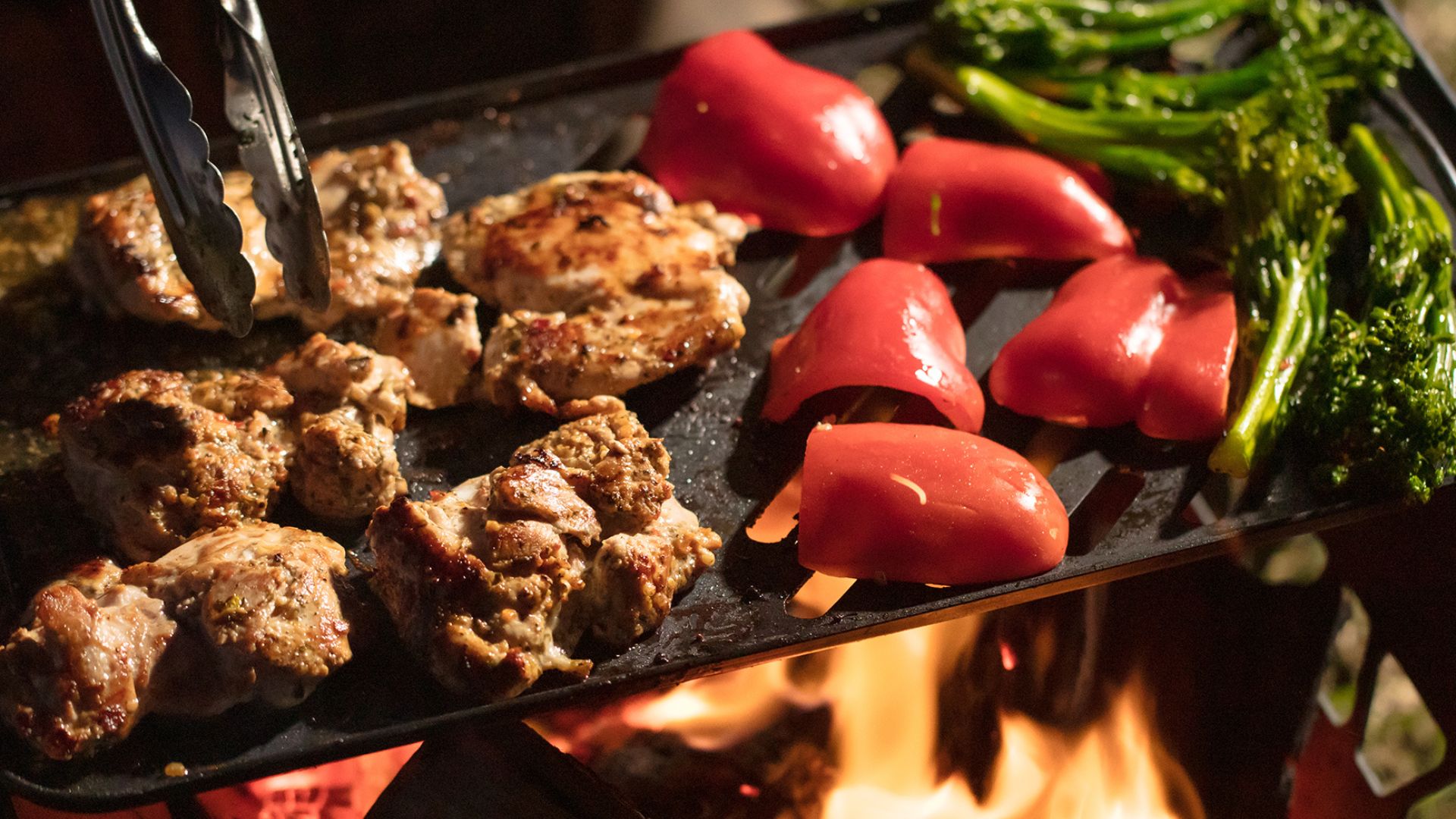
The average internal temperature (also known as the continuous flame region) of a campfire is around 900°C. However, you would typically be doing your cooking above the flames (also known as the thermal plume region), where the typical temperature would be around 320°C. This is why materials such as cast iron are recommended because it has a melting point of around 1127°C and holds heat exceptionally well.
What are the different types of fire pits?
Outside of camping stoves, many campfire cookers are fire pits that come with campfire accessories like grilling grates and hotplates that enable them to double as a cooking 'appliance'. So, as well as being handy for keeping warm in the colder weather, their versatility and all-year use make them excellent value for money.
Don't forget to take the weight of your fire pit into consideration. Cast iron fire pits tend to weigh more than their stainless steel and aluminium counterparts, but their durability is hard to fault. As well as weight, a really important element to consider is portability. Many fire pits are designed to fold down flat and minimise the space they take up, making it easier for you to get your pit from car to campsite.
What Materials Should You Use When Cooking On A Fire?
Fire pits or fire pit grills come in three main materials: cast iron, stainless steel and aluminium. These three materials are made to withstand very hot temperatures, which means they're ideal for campfire cooking. The type of materials you use when cooking on an open fire makes all the difference, not just in terms of how efficiently your food will cook but also for health reasons. As mentioned before, cast iron cookware has a melting point of 1127°C, making it the ideal material for cooking over fire.
Other materials can include stainless steel with a melting point of around 1510°C and aluminium which has a melting point of around 660°C. It's important to be mindful of the materials you're using. For example, while your cooking tongs may be stainless steel, any plastic components can melt over the fire and release harmful toxins.
What Cooking Equipment Is Best For Campfire Cooking?
While they're not essential, having the right campfire cooking accessories makes the whole experience easier, more enjoyable and a lot more delicious!
Rotisserie grill
If you are cooking for a massive group or family gathering, then a spit or rotisserie grill is going to be a sure crowd-pleaser. Slowly turning over the flames, a rotisserie delivers juicy, succulent chicken and works just as well for larger cuts when you want to impress.
Cast iron cooking tripod
A cast iron cooking tripod provides a sturdy and versatile campfire setup, with a central chain designed to suspend a grate or Dutch oven over the flames for controlled cooking.
Grill grate
When it comes to the most conventional type of cooking equipment for making a delicious meal over a campfire, a grill grate is the preferred choice. It's either attached to a stand or hanging from a cooking tripod and food is placed directly onto it. The grill grate then provides that signature 'flame-grilled taste' that fancy burger joints are always going on about.
Dutch oven
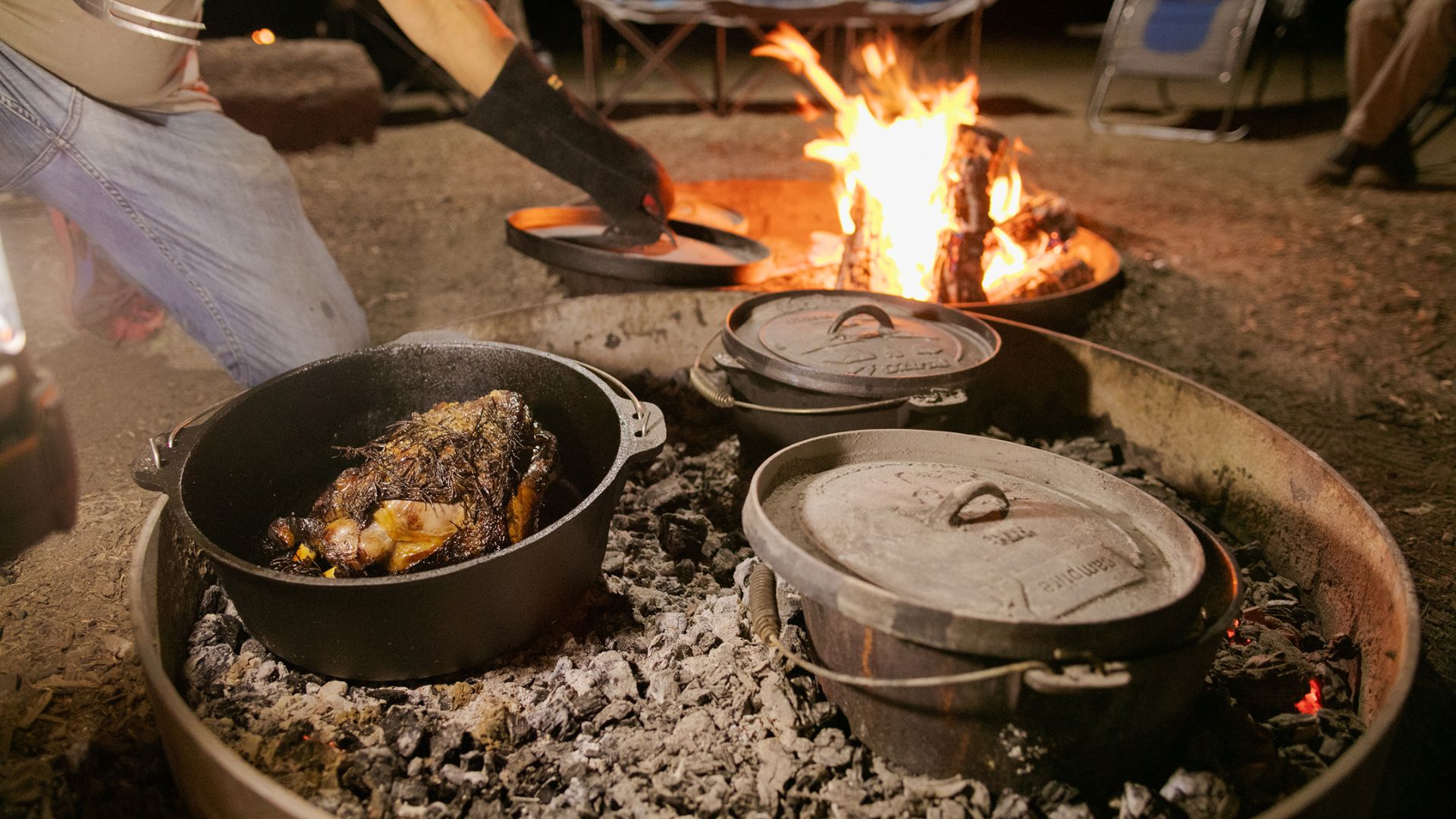
Apart from just campfire cooking, a Dutch oven is one of the most versatile pieces of cooking equipment in general. This bad boy can fit so much spaghetti in it, as well as delicious dishes like meat roasts, slow cooked stews, baked bread, enchiladas, lasagna, cakes and much more. If you want to skip a lot of the prep work but still enjoy a home-cooked meal from a Dutch oven, then check out our Ultimate Guide to Pre-Made Camping Meals.
Skillet
Placed on top of a grill grate or the fire itself, a cast iron skillet is the perfect choice for frying up a tender piece of steak or a fish you've just caught or even making desserts such as fruit cobbler. Apart from having great non-stick properties, it will also conduct heat evenly throughout the surface of the skillet as well, ensuring your meal is cooked evenly.
Steel wire brush
Unless you have a lot of faith in your sponge, a stainless-steel wire brush is going to make cleaning tough cooking equipment like grill grates much simpler. The tough bristles make cleaning easier and faster, saving you elbow grease.
What Are The Best Utensils For Open Fire Cooking?
Make sure you don't skimp on camping and hiking cookware and fire pit accessories. After all, you're dealing with fire and the natural environment, so cutting corners isn't an option. Avoid using any kind of utensil or cleaning tool that's going to be exposed to direct heat that contains plastic. Not only will the plastic melt, but there's a strong chance they'll also emit toxins that could harm you or the local wildlife.
- Long spoon: For cooking over an open fire, a long spoon is your best friend. It will help you stir stews, soups and other meals without the risk of scratching and damaging the bottom of your Dutch oven.
- Tongs: To ensure you always get a good grip on the food you're lifting so it doesn't fall into the coals, you can't cook over an open fire without a pair of good-quality stainless-steel tongs. Just make sure they don't have a plastic casing over them.
- Cutlery set: Lightweight cutlery sets are an item of camping tableware with one main advantage over standard steel cutlery: they are lighter. It may not sound that important, but lugging around a backpack with loose steel cutlery rattling around will make you think again. They are also much easier to clean, which you will probably appreciate more when it's your turn to do the dishes.
- Meat thermometer: "Is the meat cooked enough? Should this be that pink?" Make your life easier by bringing along a digital meat thermometer. If you're cooking whole meats and the internal temperature clocks in at around 65°C, then there's no need to ask the question.
How To Build An Open Fire For Cooking
Safety comes first when you're building a campfire and choosing the right spot to build your fire is paramount. If your camping spot doesn't have dedicated space for building your fire pit, make sure the ground underneath your pit location is completely clear of any debris and has wind protection. Also, make sure there is nothing directly above the fire, like low-hanging branches or anything that can come into direct contact with the flames as they rise.
Once you've ticked off these boxes (and you're following the open-fire regulations of your camping site), you're ready to follow these steps:
1. Choose the right spot
Building a fire in a windy spot that's right next to a pile of dry leaves isn't the smartest idea. Choosing the location is the first important step to building a fire for cooking. You need to make sure there is nothing directly above the fire, like low-hanging branches or anything that can come into direct contact with the flames as they rise. Also, make sure that the spot is clear of things like loose tree roots, grass and anything flammable. If possible, use a pre-built fire pit or bring your own fire pit.
2. Set up your kindling
Once you've found a good spot for your fire, it's time to add the kindling and tinder. This could be small pieces of dead branches, dry leaves or even crumpled-up newspaper. A good method is to create a base layer of dry leaves or newspaper and then place down a few dry thin sticks in a checkerboard pattern.
3. Put on your firewood
Make sure you have your firewood ready to go (many campsites also sell firewood) and begin igniting the tinder with a match or firestarter. As the kindling begins burning, start carefully placing the pieces of firewood in a cone shape by resting them against each other.
4. Add your cooking surface
Now it's time to carefully place down your cooking surface, whether it's a grill grate or a cooking tripod. It's also a good idea to always make sure you have a bucket of water near the fire in case you need to extinguish it in a hurry.
For more detailed instructions, have a look at our guide to How to Build & Safely Enjoy A Campfire.

Essential Tips For Cooking On A Fire
Always use the right campfire cooking gear
Using the right campfire cooking gear is going to make your life a lot easier. As mentioned before, the last thing you want when cooking a succulent piece of steak is to get hit with the strong smell of melted plastic. This also extends to your clothing as well. Make sure you are always wearing enclosed footwear around a fire, as all it takes is one piece of hot ash to land between your toes to ruin your night.
The location of your campfire matters
For a variety of reasons, mainly for safety, finding the right location to start your fire is essential. Ideally, you would want to find large flat rocks to ensure the fire is contained, but if none are available, a fire pit or creating a fire inside a circle of rocks is best. You want to make sure that the ground is completely clear of any debris and that there is a high clearance above the fire, as the last thing you need is an awning or nearby branch catching on fire. Also, make sure that your fire is protected from wind, as a gust of wind may either put your fire out or spread it around the campsite.
Always use the right type of firewood
If it burns, that means it's good, right? No. If you use the wrong type of wood, such as fresh or green wood, your fire will start to billow smoke everywhere and burn poorly. Wood that has been contaminated by foreign substances or chemically treated can emit harmful fumes when ignited. The ideal firewood you want to use is seasoned dry wood. Luckily, it is easy to find, and most campsites and petrol stations will sell packaged firewood for fire pits and camp cooking.
Never cook over an open flame
Roasting a marshmallow over an open flame is not the same as cooking a piece of meat over an open flame. Without using a cooking surface like a grill grate, your food will end up burnt on the outside and uncooked on the inside. Unless you want to spend most of your camping trip hating life while squatting over a latrine, make sure you never cook your food over an open flame.
Watch your cooking times
Remember that you are cooking with fire and not an easily controlled induction stove. Because more heat is being used in the cooking process, you will have to factor in what is called 'carryover cooking'. Without going too deep into the complexities of thermodynamics, carryover cooking is when cooked food starts to equilibrate under its own retained heat. Basically: hot food stays hot longer, which means that perfectly cooked fish will continue cooking and start to dry out before you can tuck into it. To avoid this, simply take your food off the fire a few minutes earlier than you normally would.
Cleaning and maintaining your fire pit & camp cooking equipment
When choosing a fire pit, it's important to check out how easy they are to clean and the kind of maintenance required to keep them in good nick between camping trips. To clean your camp grill while in the great outdoors, remove the grates and scrub the underside with your wire brush. Using non-toxic wilderness detergent, wash the outside of the grill, then rinse and dry thoroughly.
Practice at home before your trip
It's a good idea to use your cooking setup a few times at home before heading off so you're familiar with its cooking times and quirks. Additionally, our guide to easy camping food ideas contains plenty of inspiration for awesome meals you can enjoy on your next camping trip and plan out before you go bush.
Whether you are camping alone or with friends, very few moments in life can match the feeling of being huddled around a warm fire while the smell of delicious food fills the air. Make sure you follow the advice given to ensure that cooking on a fire is a celebratory experience that creates a lasting memory you can cherish forever - and not an example of what not to do.
Find Everything You Need To Enjoy Delicious Campfire Cooked Meals At Anaconda Today
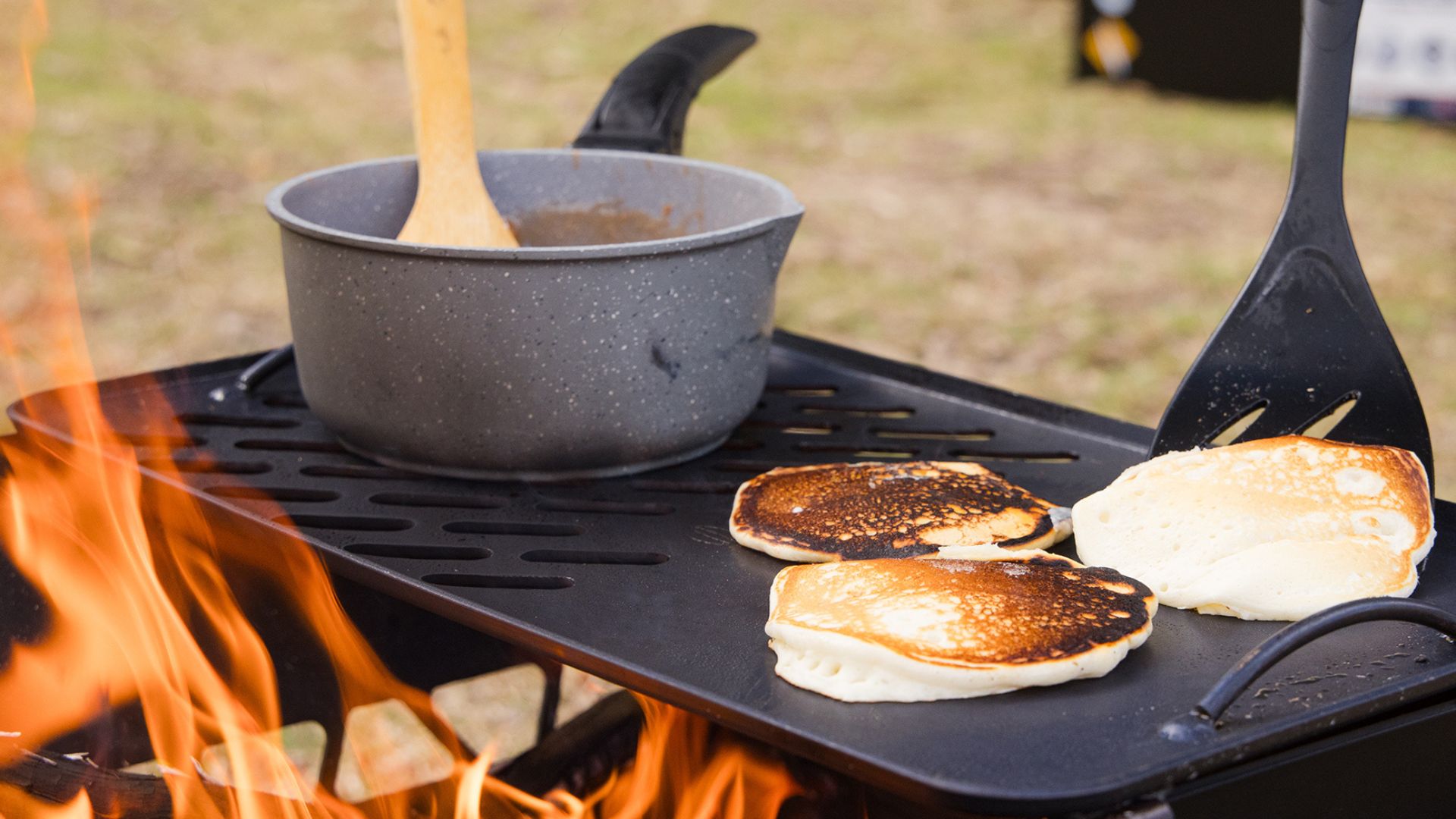
As any fisho will tell you, there's nothing that compares to the taste of cooking that day's catch over an open campfire. And for countless campers, starting the day off with bacon and eggs cooked on a cast iron skillet or doing some sausages, chicken fillets or steaks with damper in the evening and then toasting marshmallows with the kids before bed is part of what makes camping so much fun. Plus, campfire cooking also adds those unmistakable flame-grilled flavours to vegetables and any plant-based meals.
Whatever your food habits, there's nothing like finishing a day in the great outdoors with a delicious, campfire-cooked meal and relaxing in a comfy camping chair. Now that you know how to start a fire, the correct way when cooking on a fire and tips to keep in mind, make sure you have everything else you need for your next outdoor adventure by exploring our camping and hiking range. Shop your local Anaconda store for a huge range of camp cooking supplies, including camping tableware and utensils and accessories, to make cooking fun and easy!
Plus, make sure you check out our Adventure Centre for more handy tips and exciting destinations you can visit. If you liked this guide to Guide To Cooking On An Open Fire, then you might also like some of our other helpful articles such as:
